The short answer
Send every ad to a page that continues its promise: the same offer, in the same words, with one clear next step. Marketers call this message match, and it is one of the cheapest conversion gains available, because it improves results from media you are already paying for.
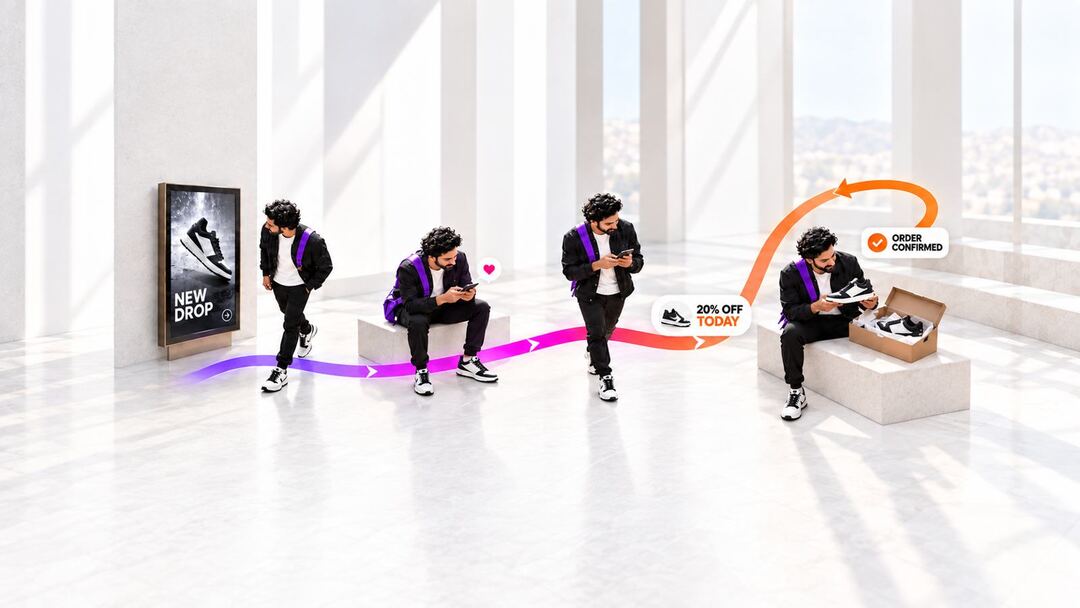
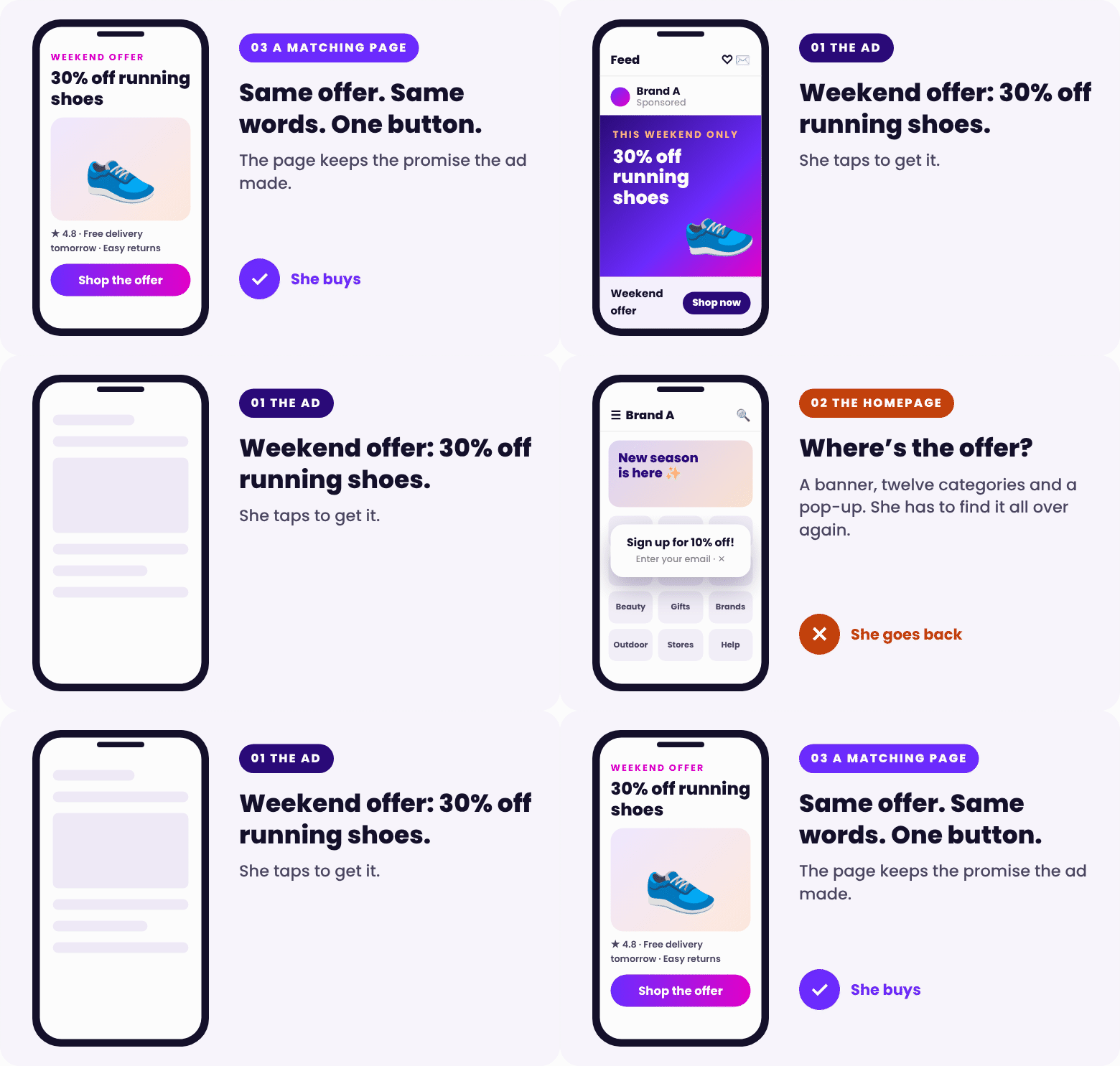
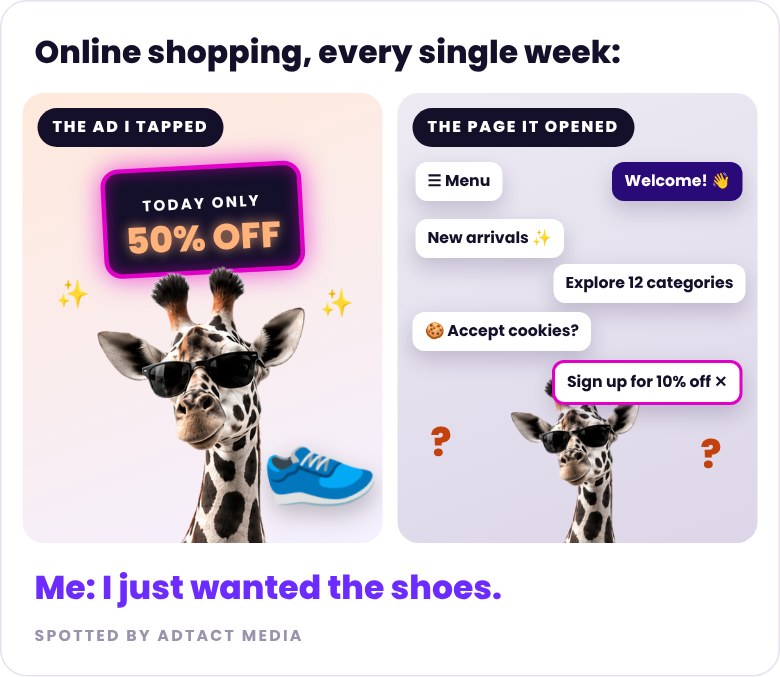
A click is a small act of trust. Someone saw a specific promise, a weekend offer on running shoes, a free consultation, a new menu item, and tapped to get it. If the page that opens shows something else, such as a homepage banner, twelve menu categories and no sign of the offer, most people do not go looking. They go back.
From 2027 the stakes rise. Ad platforms increasingly choose the landing page themselves, AI assistants summarise pages before people visit them, and in the GCC almost every click arrives on a phone. A page that matches its ad is no longer a nice-to-have. It is how the ad gets judged, priced and believed.
Who this is for: anyone in the UAE, Saudi Arabia or the wider GCC who runs ads on Google, Meta, TikTok, Snapchat or retail platforms and wants more from the same budget.
12 numbers every advertiser should know about landing pages
-
68.27%
of web traffic in Saudi Arabia was on mobile in September 2026 (UAE: 60.04%).
Statcounter -
6.6%
median landing page conversion rate across industries (range 3.8% to 12.3%).
Unbounce -
56%
higher conversion for pages written in simple, easy-to-read language.
Unbounce -
+8.4%
retail conversions from a 0.1-second faster mobile site (travel: +10.1%). 2019 study.
Google / Deloitte -
+21.6%
more lead-form completions from the same 0.1-second gain. 2019 study.
Google / Deloitte -
3×
the conversion rate for a B2B page loading in 1 second versus 5 seconds. 2022 study.
Portent -
2.5s
Google’s “good” threshold for the main content to load (LCP).
web.dev -
70.22%
average online cart abandonment rate.
Baymard -
7–8
checkout fields is ideal. The average checkout asks for 14.88.
Baymard -
76%
of consumers get frustrated when a brand doesn’t personalise.
McKinsey -
60%
of brands expected to use agentic AI for one-to-one interactions by 2028.
Gartner -
$17.5bn
UAE conversational commerce forecast by 2028.
ResearchAndMarkets
The pattern behind all twelve: a page that is relevant, fast, short and simple keeps more of the people the ad already paid for.
Why do so many ads still land on the homepage?
It is rarely a decision. It is a gap between teams and timelines. Three patterns explain most of it:
- Different owners. One team or agency makes the ads, another owns the website. Nobody's job description includes the space between them.
- Different speeds. Campaigns change weekly: new offers, new creatives, Ramadan, White Friday, Dubai Shopping Festival. Websites change quarterly, if that. The homepage becomes the default destination because it is the only page that always exists.
- Different measures. Ads are judged on clicks and cost per click; the website is judged on traffic. The moment the click becomes a sale, or does not, falls between both reports.
What it costs. A mismatched page loses in three places at once. People who clicked leave before acting, so the same budget buys fewer customers. Ad platforms read that behaviour as a weak experience and can charge more for the same placement. And the brand teaches its customers that its ads overpromise, which makes the next ad less believable. None of these shows up as a line item, which is why the leak lasts.
Why does message match matter even more from 2027?
Because the people, the platforms and the algorithms are all now checking whether the click kept its promise. Four shifts make the landing page part of the ad itself.
1. Google already scores the match. Google's Ad Rank weighs "the expectations users have about your landing page based on the clicked ad creative", and notes that higher-quality ads can often lead to lower costs per click. Landing page experience is one of the three parts of Quality Score, and Google's own advice is to "choose a landing page that closely matches your ad and keywords".
2. AI now picks the landing page for you. In Performance Max, final URL expansion is on by default: Google can replace your chosen page with one from your site it thinks is more relevant. AI Max for Search, announced in May 2025, brings the same option to search ads, and Google reports advertisers typically see 14% more conversions or conversion value at a similar cost. The implication for 2027 is simple: every page on your site is now a possible landing page. The pages you publish, for each offer and in each language, are the menu the algorithm chooses from.
3. The GCC clicks on a phone. Mobile carried 68.27% of web traffic in Saudi Arabia and 60.04% in the UAE in September 2026, and social and app traffic skews even further to mobile. On a small screen there is no room for a page to wander before it gets to the point.
4. The landing page is becoming a conversation. Meta reported click-to-WhatsApp ad revenue up 60% year on year in Q3 2025, and UAE conversational commerce is forecast to reach $17.5bn by 2028. Gartner expects 60% of brands to use agentic AI for one-to-one interactions by 2028. When the ad opens a chat, the pre-filled message, the greeting and the first reply are the landing page, and WhatsApp's own guidance is to deliver "whatever the promotion promised quickly after an ad click".
And a bonus for search visibility. Google says there are no special optimisations needed to appear in AI Overviews or AI Mode beyond helpful, people-first content and a great page experience. A clear, fast, single-purpose page is exactly that, which is why good campaign pages often earn organic and AI visibility too.
What does a page that matches its ad look like?
A matching page answers the customer's two silent questions within three seconds: am I in the right place? and what do I do now? It does that with five elements.
Weekend offer: 30% off running shoes Free delivery in Dubai. Ends Sunday.

- The promise, repeated. The headline uses the ad's own words. If the ad said "Weekend offer: 30% off running shoes", the page says the same, not "Welcome to our store".
- The thing, shown. The exact product, offer or service from the ad sits above the fold, with the same image or visual style, so recognition is instant.
- One action. Buy, book, call or WhatsApp. One primary button, repeated as the page scrolls, not five competing links.
- Proof, close to the button. A rating, a delivery promise, a returns policy, a short customer quote or a payment option such as instalments. Whatever answers the doubt that stops the tap.
- Built for a thumb. Fast to load, easy to read on a small screen, the button within reach, and forms cut to the fewest fields that do the job.
Language counts as a match too. An Arabic ad that opens an English page breaks the promise as surely as a wrong product does. In the GCC, the ad's language, currency (AED or SAR), and delivery area should carry through to the page.
What a matching page leaves out. The main menu, the newsletter pop-up that appears before the offer, the auto-playing brand video and the twelve-category grid. Each is useful somewhere else. On a campaign page, each is an exit.
Where should each type of ad send people?
The right destination depends on what the person was doing when they saw the ad. Searching means they already know what they want; scrolling means you interrupted them. Match the page to that moment.
| Ad type | What the person is doing | Best destination | What the page must show first |
|---|---|---|---|
| Search ad for a product | Looking for that exact thing | The product page, or a filtered category page | The product, price display, delivery time, buy button |
| Search ad for a service | Comparing providers | A service page written for that search term | What you do, for whom, proof, book or call |
| Social video or image ad | Scrolling, curious, not yet looking | A campaign page that continues the creative | The same visual and headline, then one action |
| Retargeting ad | Came back after visiting | The exact product or page they viewed | What they looked at, plus the reason to act now |
| Click-to-WhatsApp ad | Ready to ask a question | A WhatsApp chat opened with a pre-filled message | A fast first reply from a person, ideally within minutes |
| Lead form ad (on platform) | Willing to share details | An instant form, then a thank-you page | Few fields, and what happens next and when |
| Retail media or delivery app ad | Already shopping in the app | The product listing inside the app | Stock, price, delivery time, ratings |
| Event or seasonal ad (Ramadan, White Friday) | Looking for the occasion | A seasonal page that names the occasion | The occasion's offer, valid dates, one action |
| B2B or ABM ad | Researching, rarely ready to buy | A page made for that industry or account | The problem in their words, a useful resource, a light next step |
Rule of thumb: the more specific the ad, the more specific the page. One campaign page per offer is enough; you do not need a new website.
How can you check your own ads in five minutes?
You need a phone, your ads manager and five minutes. No tools, no agency.
- Open your three most-clicked ads from last month.
- Tap each one on your phone, on mobile data rather than office Wi-Fi.
- Start counting when the page begins to load. At three seconds, stop and ask:
- Can I see what the ad promised?
- Is it in the same language and currency as the ad?
- Do I know exactly what to tap next?
- Score each ad: three yeses is a match, anything less is a leak.
- Fix the ad with the most clicks and the lowest score first. That is where the money leaks fastest.
What to measure after the fix. Compare two weeks before and two weeks after, on the same budget:
| Measure | Where to find it | What good looks like |
|---|---|---|
| Landing page experience | Google Ads keyword Quality Score columns | Moves from "below average" to "average" or better |
| Conversion rate from that ad | Ads manager or GA4 | Rises on the same traffic |
| Bounce or engagement rate | GA4 landing page report | Fewer single-page sessions |
| Cost per lead or sale | Ads manager | Falls on the same budget |
| Mobile load time (LCP) | PageSpeed Insights | Under 2.5 seconds |
One honest caveat: one fix rarely explains everything, and seasonality moves numbers on its own. Change one thing at a time, and compare like with like.
The takeaway
The ad earns the click. The page keeps the promise. Match them, and the money you already spend on ads works harder, with the algorithm, the customer and the next campaign all on your side.
Frequently asked questions
What is message match in advertising?
Message match means the landing page repeats the promise of the ad that sent the visitor: the same offer, the same words and visuals, and one clear next step. It reassures people within seconds that they are in the right place.
Does the landing page affect Google Ads costs?
Yes. Google's Ad Rank considers the relevance and usefulness of your ad and landing page, including what users expect after clicking, and Google notes that higher-quality ads can often lead to lower costs per click. Landing page experience is also one of the three components of Quality Score.
Should ads send people to the homepage?
Rarely. A homepage serves everyone, so it matches no single ad. Send search ads to the product or service page that answers the search, and social ads to a campaign page that continues the creative.
What is final URL expansion in Google Ads?
It is a setting that lets Google replace your chosen landing page with another page from your site that it judges more relevant to the search. It is on by default in Performance Max and available with AI Max for Search. You can add URL exclusions to keep it away from pages that should not receive ad traffic.
How fast should a landing page load?
Google's "good" threshold is the main content loading within 2.5 seconds (Largest Contentful Paint). A Google and Deloitte study found a 0.1-second improvement lifted retail conversions by 8.4%.
What is a good landing page conversion rate?
Unbounce's benchmark of more than 41,000 landing pages puts the median at 6.6% across industries, ranging from 3.8% to 12.3% by industry.
How many landing pages do I need?
One per offer or campaign is enough, plus one per language you advertise in. Most website builders and ad platforms let you duplicate a template and change the headline, image and button in minutes.
Is a WhatsApp chat a landing page?
For click-to-WhatsApp ads, yes. The pre-filled message, the greeting and the first reply do the landing page's job, so they should repeat the ad's offer and respond quickly. WhatsApp advises delivering what the promotion promised soon after the click.
Should my Arabic ads go to Arabic pages?
Yes. Language is part of the promise. An Arabic ad that opens an English page asks the customer to switch context at the exact moment you want them to act.
Sources
Every page below was opened and read on 13 October 2026. Some speed studies are several years old; they are included as long-standing evidence and labelled with their year.
Google: Quality Score · Ad Rank · Landing page guidance · AI Max for Search, May 2025 · Final URL expansion in Search · Final URL expansion in Performance Max · AI features in Search · Core Web Vitals · Milliseconds Make Millions, 2019
Meta and WhatsApp: Click-to-WhatsApp ad guide · Click-to-WhatsApp ads, developer docs · Meta Q3 2025 results via exchange4media
Conversion research: Unbounce Conversion Benchmark Report · Portent site speed study, 2022 · Baymard cart abandonment, 2025 · McKinsey, personalisation, 2021
Market and forecasts: Statcounter, Saudi Arabia · Statcounter, UAE · Gartner, agentic AI by 2028 · UAE conversational commerce forecast